Manlambus known today as Escalante City
Before the map said Escalante, coastal fisherfolk here called their shore Manlambus — Visayan for “to strike with a club,” because the waters ran so thick with fish that a wooden lambus was catch enough.
At a glance
Landmarks & shoreline
Old Poblacion's heritage, the cross on Mt. Lunay, and the sandbars and islands offshore.
The sandbars: Pamaawan, Paliswihan & Panansalan
Three sandbars rise from the shallows off Escalante. Floating cottages tow out to one of them for the day — pick your sandbar when you book.
Get there by floating cottage →St. Francis of Assisi Church Ruins
Raised in the late 19th century as part of the Augustinian Recollects' mission — now standing as weathered stone, one of the coast's oldest markers of the sugar era.
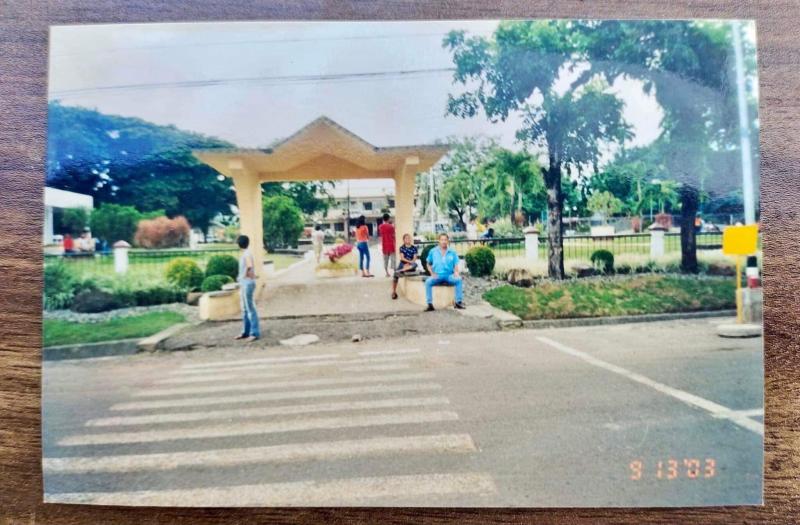
Plaza, Rizal Monument & Memorial
The city's civic heart: a Rizal Monument, the Municipal Portal, and the 1985 memorial — heritage and remembrance sharing the same ground.
Mt. Lunay
Also called Mt. Solitaire: about 500 steps climb past sugarcane to a giant metal cross overlooking the whole city and the strait — a pilgrim's climb during Holy Week.
Double Palm Inn
A downtown inn a short walk from the plaza, with a pool, restaurant and function room — a handy base for exploring the rest of Escalante.
Jomabo Paradise Island
An island resort reachable by boat, built for a full day on the water — scuba diving, windsurfing, and banana-boat rides in the Tañon Strait.
Bonista Beach Resort
A beachfront stop with pools and dining, easygoing enough for a half-day trip out from the city proper.
Manlambus Beach Resort
The beach that shares the coast's old name, tucked beside a rocky headland in Old Poblacion — calm, clear shallows for kayaking, sunsets over the strait, and a new pickleball court. Cottages are first-come, first-served.
Floating Cottages
Floating cottages anchored off Escalante's northern coastline — a whole-day trip out to a white-sand sandbar for your group. Bring your own food; karaoke, a grill, and life jackets come standard.
Trips leave from Old Poblacion, the same waterfront district as the church ruins, and run from 8 AM to 4 PM. Some cottages sail under their own engine; others are towed out or reached by pumpboat.
Where to book
What the public market bakes
Pan Bisaya
A native bread with a sweet grated-coconut filling, sold fresh at Escalante's public market and loved across northern Negros — the everyday taste of a town still shaped by the cane fields and coconut groves around it.
Old Poblacion bakers still bake it the traditional way, in a hornohan — a makeshift oven built from empty cooking-oil cans and fired with dried coconut husks — until the loaves turn golden brown. Locals have it mid-morning or mid-afternoon with coffee, and it turns up at parties, school events and office gatherings.
The Manlambus Festival
Escalante's street-dance festival, now in its third decade, retells the coast's own origin story — performed, not just remembered.
Seven community contingents compete each year in the street-dance competition, with movements simple and expressive enough for dancers of every age — a festival built to be danced by the whole city, not just watched.
Plan with local guides
Travel tips, festival news and features from Escalante — written by the people who live here.

By land, or across the strait
By bus, from Bacolod
Roughly 2.5 hours by bus from Bacolod City — about 95 km along the coast road that links Negros Occidental's northern towns. San Carlos City is 49 km to the south.
By ferry, across to Cebu
E.B. Aznar Shipping runs several trips daily between Escalante and Tabuelan, Cebu — about a 3-hour crossing of the Tañon Strait.
A coastline's long memory
From a fishing ground struck with clubs to a sugar town to a city — how Manlambus became Escalante, in the events that mark the shore.
Escalante in figures
The coast known as Manlambus
Upland and shoreline communities along this stretch of the Tañon Strait shared a name for their waters: Manlambus, “to strike with a club” — a nod to fish so abundant that a lambus, a simple wooden club, was tool enough to catch them.
Artifacts unearthed by a Silliman University anthropological team in 1975–76 suggest the area was inhabited as early as the 11th century.A municipality is created
On November 28, 1856, Gobernador Manuel Crespo ordered the creation of the municipality, with Nueva Sevilla — today’s Old Poblacion — as its seat of government.
Renamed Escalante
Fr. Cipriano Navarro, the first Spanish missionary assigned to the town, renamed it Escalante after his hometown in Spain. Its parish was established on May 22, 1860.
Sugarlandia takes root
Sugarcane reshaped the local economy. By 1891 the town ran 53 sugar mills across roughly 848 hectares — the trade that would define Negros for a century, and still marks the land today.
St. Francis of Assisi Church, in Old Poblacion, was built in this period by the Augustinian Recollects.Toboso splits off
Escalante was once so large that its population outnumbered Bacolod's until 1939. On May 19, 1948, President Elpidio Quirino's Executive Order No. 141 made Toboso — one of its biggest barangays — a separate municipality.
The seat moves to Balintawak
Executive Order No. 301 by President Carlos P. Garcia moved the seat of government from Old Poblacion to Barangay Balintawak, where the city center is today. Old Poblacion keeps the earlier landmarks.
A day the city remembers
A memorial in the public plaza honors twenty lives lost that day, during the unrest of the Martial Law years — a solemn marker woven into the city's story of resilience.
Cityhood
Republic Act No. 9014, signed by President Gloria Macapagal-Arroyo on February 28, 2001, made Escalante a component city of Negros Occidental; residents ratified it in a plebiscite on March 31, 2001 — 14,075 votes to 648.